

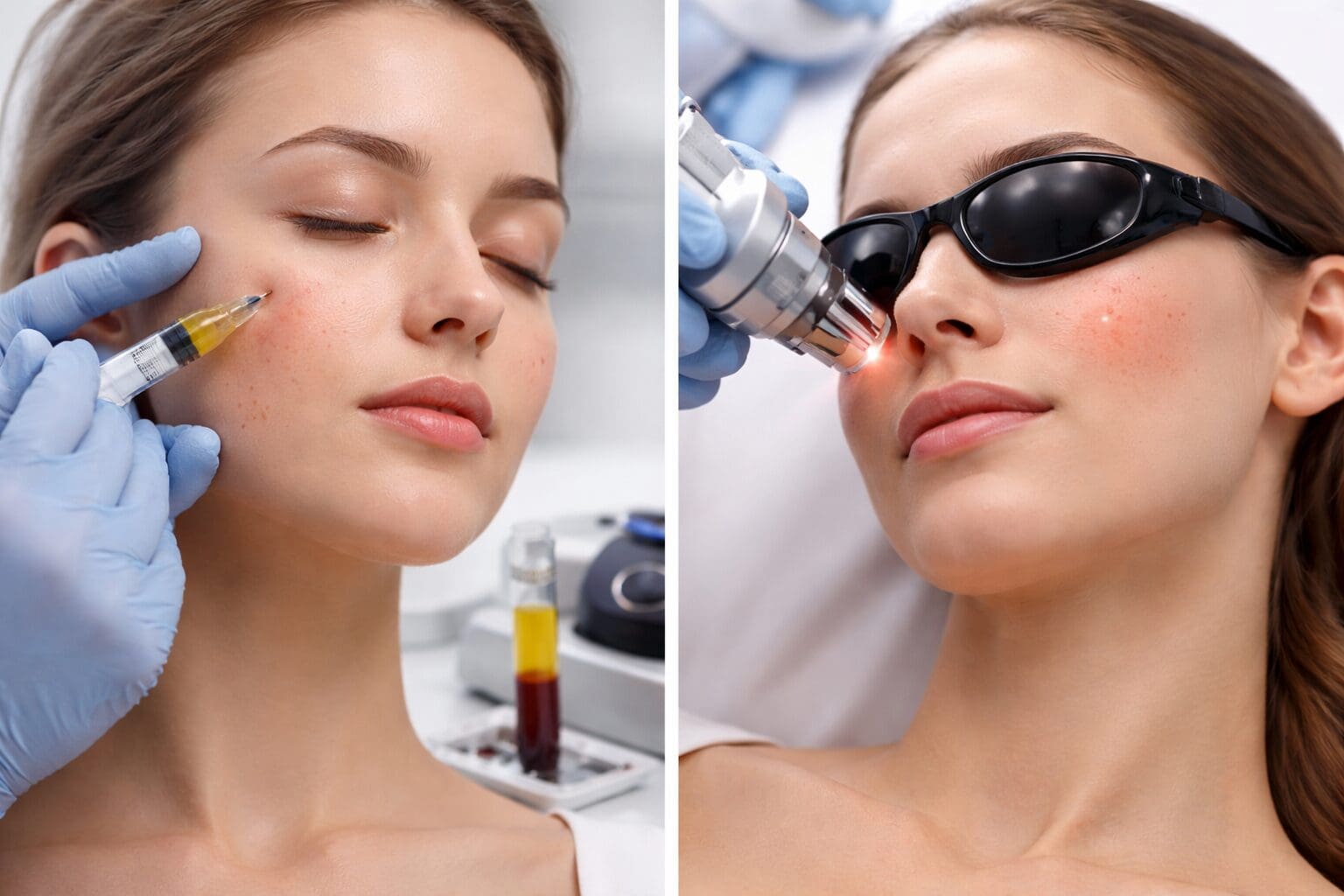
PRP for Acne Scars vs. Laser Resurfacing: A Data-Backed Comparison
Acne scars can be hard to treat and often affect long-term confidence. Today, two popular treatments, Platelet-Rich Plasma (PRP) therapy and laser resurfacing, offer real ways to improve scar texture and skin quality. Both aim to stimulate healing, but they work differently and deliver different results.
Understanding PRP and Laser Resurfacing
What Is PRP for Acne Scars?
PRP therapy uses a small sample of your blood to separate plasma that contains concentrated platelets. These platelets hold growth factors that encourage new collagen production and tissue repair. When applied or injected into acne-scarred skin, PRP supports gradual improvement in texture, tone, and firmness. Many patients choose PRP because it is natural, minimally invasive, and requires very little downtime.
What Is Laser Resurfacing for Acne Scars?
Laser resurfacing uses controlled light energy to target damaged skin. Fractional lasers, such as CO₂ or Er:YAG, create microscopic channels in the skin, which trigger a strong healing response. This process leads to collagen remodeling and smoother, more even skin. Because lasers break down scar tissue more deeply, they often work better than surface treatments for moderate to severe acne scars.
PRP vs. Laser Resurfacing
Effectiveness
Studies show that laser resurfacing typically creates stronger improvement in moderate to deep acne scars. PRP alone offers mild to moderate improvement, especially for surface texture and early-stage scars. However, data also shows that combining PRP with laser resurfacing increases results and speeds up healing.
Safety and Side Effects
- PRP: Since PRP uses your own blood, the risk of reactions is low. Side effects are mild and temporary.
- Laser Resurfacing: Lasers carry a higher risk of temporary pigmentation changes, especially in darker skin tones. Choosing an experienced provider reduces risk.
Number of Sessions Needed
- PRP: Usually requires multiple sessions to build results.
- Laser: Often produces visible improvement in fewer sessions, though deeper scars may still need repeated treatments.
Who Benefits Most From Each Treatment?
When PRP Is a Better Choice
Choose PRP if you:
- Have mild acne scars or textured skin
- Prefer a gentler approach that supports collagen growth
- Want a natural treatment with less downtime
- Have sensitive or darker skin that reacts poorly to lasers
When Laser Resurfacing Is a Better Choice
Choose laser resurfacing if you:
- Want stronger improvement in fewer sessions
- Have moderate or deep acne scars
- Can manage more downtime for better results
When to Combine PRP and Laser
Combination therapy is ideal if you:
- Want maximum improvement in scar texture and depth
- Want faster healing after laser resurfacing
- Are willing to invest in a more comprehensive approach
- Prefer treatment backed by strong clinical results
Many clinics use PRP immediately after laser resurfacing because it reduces redness, speeds up skin recovery, and enhances collagen production.
Treatment Experience and Recovery Expectations
What to Expect With PRP
During PRP therapy, your provider draws a small amount of blood, processes it, and injects or applies the plasma to targeted areas. Most patients return to normal activities the same day. Improvements appear gradually as collagen forms over several weeks.
What to Expect With Laser Resurfacing
Laser treatments create controlled micro-injuries that trigger deeper skin repair. Recovery includes redness, peeling, and sensitivity. Results begin to show as new collagen builds and skin heals over the following months.
Choosing the Right Treatment
PRP therapy and laser resurfacing both offer proven benefits for acne scar treatment. PRP works well for mild scars and supports healthy skin regeneration with minimal downtime. Laser resurfacing delivers deeper correction and stronger results for moderate to severe scars.
At MetroMed, we tailor a personalized approach by evaluating your skin and treatment goals. Book a consultation to discover the most effective option for you.