

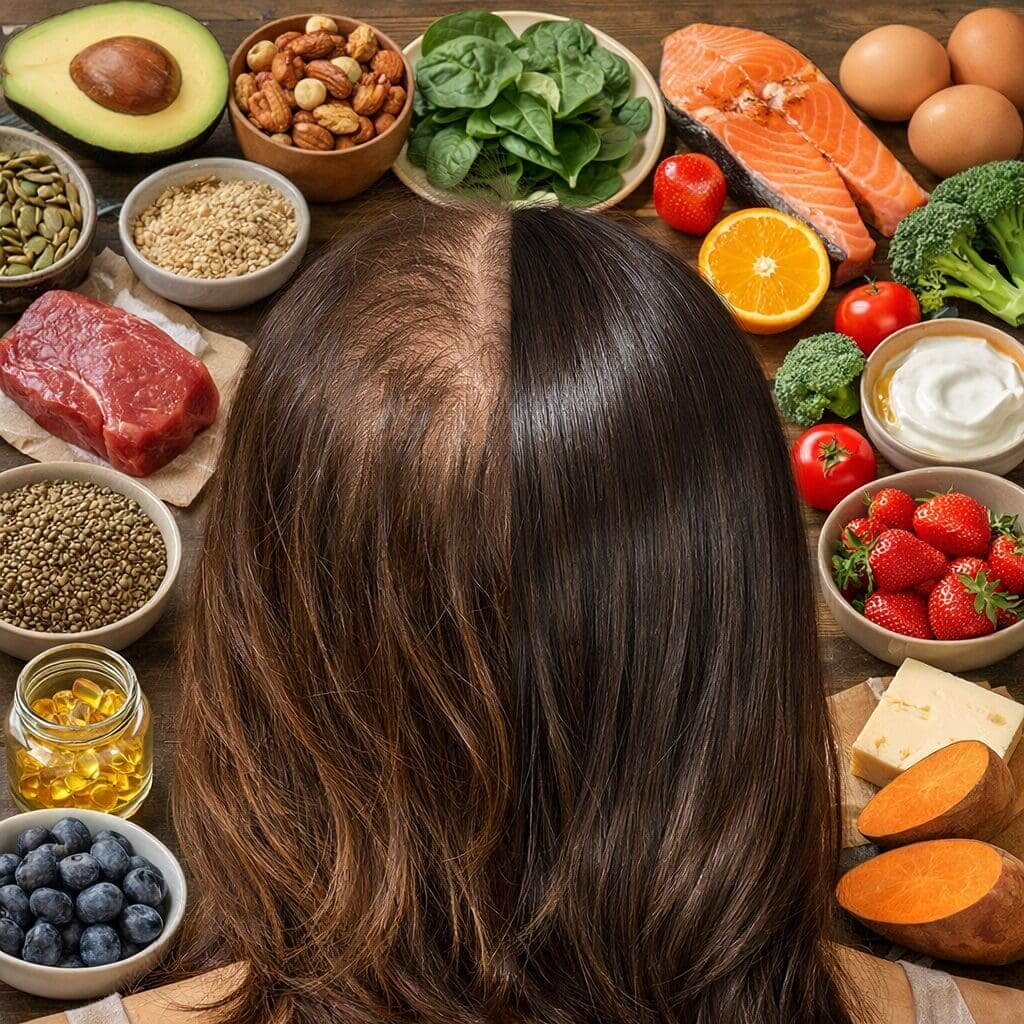
Does Diet Affect Hair Growth? Foods Backed by Science
Your hair tells a story about your health. If you’ve noticed thinning strands or slower growth, your diet might hold the answer. Research shows that what you eat directly impacts how your hair grows and stays healthy.
The Connection Between Diet and Hair Growth
Hair follicles need specific nutrients to function properly. When your body lacks these essential vitamins and minerals, hair growth slows down. In fact, poor nutrition ranks among the top causes of hair loss and weak hair structure.
Think of your hair like a plant. Without the right nutrients, it can’t thrive. Similarly, your hair follicles depend on a steady supply of proteins, vitamins, and minerals to produce strong, healthy strands.
Protein: The Building Block of Hair
Hair consists mainly of a protein called keratin. Therefore, eating enough protein becomes crucial for hair growth.
Best Protein Sources for Hair
Lean meats, fish, and eggs provide complete proteins that your body easily absorbs. Additionally, plant-based options like beans, lentils, and quinoa work well for vegetarians and vegans.
Research indicates that protein deficiency can push hair follicles into a resting phase. This leads to increased shedding and slower growth. Most adults need about 50-60 grams of protein daily to support healthy hair growth.
Iron: Oxygen Delivery for Hair Follicles
Iron helps red blood cells carry oxygen to your hair follicles. Without enough iron, your follicles can’t get the oxygen they need to grow.
Iron-Rich Foods That Boost Hair Growth
Spinach, red meat, and fortified cereals pack plenty of iron. Furthermore, combining these foods with vitamin C sources helps your body absorb iron more effectively.
Studies show that iron deficiency appears more common in people experiencing hair loss. Women, especially, should monitor their iron levels since they face higher risks of deficiency.
Omega-3 Fatty Acids: Nourishment from Within
Omega-3 fatty acids reduce inflammation and nourish hair follicles. These healthy fats also help keep your scalp hydrated and healthy.
Top Omega-3 Sources
Fatty fish like salmon, mackerel, walnuts, flaxseeds, chia seeds, and sardines contain high levels of omega-3s. Research demonstrates that omega-3 supplements can reduce hair loss and increase hair density. However, getting these nutrients from whole foods provides additional benefits.
Biotin: The Hair Growth Vitamin
Biotin, also known as vitamin B7, plays a vital role in hair growth. This vitamin helps produce keratin and supports overall hair health.
Foods High in Biotin
Eggs, almonds, sweet potatoes, and avocados deliver excellent amounts of biotin. Many people also consume biotin through organ meats and whole grains.
While biotin deficiency remains rare, increasing your intake may improve hair strength and reduce breakage. Most adults need about 30 micrograms daily.
Vitamin D: The Sunshine Nutrient
Vitamin D helps create new hair follicles. Low levels of this vitamin link directly to hair loss conditions.
Getting Enough Vitamin D
Your body produces vitamin D from sunlight exposure. However, you can also find it in fatty fish, fortified milk, and egg yolks.
Studies reveal that people with hair loss often have lower vitamin D levels. Spending 10-15 minutes in the sun daily or taking supplements can help maintain healthy levels.
Zinc: Cell Growth and Repair
Zinc helps repair hair tissue and supports healthy oil glands around hair follicles.
Zinc-Rich Foods for Hair Health
Oysters contain more zinc than any other food. Other good sources include beef, pumpkin seeds, and lentils.
Research shows that zinc deficiency causes hair loss and weakens hair structure. Most adults need 8-11 milligrams of zinc daily for optimal hair health.
Vitamin C: Antioxidant Protection
Vitamin C helps your body produce collagen, absorb iron and shields hair follicles from free radicals.
Best Vitamin C Sources
Citrus fruits, strawberries, bell peppers, and broccoli provide abundant vitamin C. Additionally, these foods offer other nutrients that benefit hair health.
Your body can’t store vitamin C, so you need to consume it regularly. Aim for at least 75-90 milligrams daily.
Vitamin E: Scalp Health Supporter
Vitamin E improves blood circulation to the scalp. Hair follicles that contain more nutrients result in better circulation.
Foods Containing Vitamin E
Sunflower seeds, almonds, spinach, and avocados supply good amounts of vitamin E. These foods also contain other hair-healthy nutrients.
One study found that people taking vitamin E supplements experienced a 34% increase in hair growth over eight months.
Practical Tips for a Hair-Healthy Diet
Creating a diet that supports hair growth doesn’t require drastic changes. Instead, focus on incorporating these nutrient-rich foods regularly. Start by eating a variety of colorful fruits and vegetables daily. This ensures you get multiple vitamins and minerals. Next, include a protein source with each meal to support keratin production. Furthermore, stay hydrated by drinking plenty of water. Dehydration affects hair texture and can slow growth.
When to See Results
Hair grows slowly, so patience matters. Most people can expect their hair to grow around half an inch every month. Therefore, dietary changes may take three to six months to show visible results. Keep in mind that consistency matters more than perfection. Making small, sustainable changes to your diet creates lasting benefits for your hair.
If hair thinning or shedding continues despite healthy lifestyle changes, working with a medical provider can help identify additional factors. At MetroMed, personalized hair restoration and wellness solutions focus on addressing hair loss from the inside out, combining nutrition, regenerative treatments, and medical guidance to support long-term hair health and natural results.