

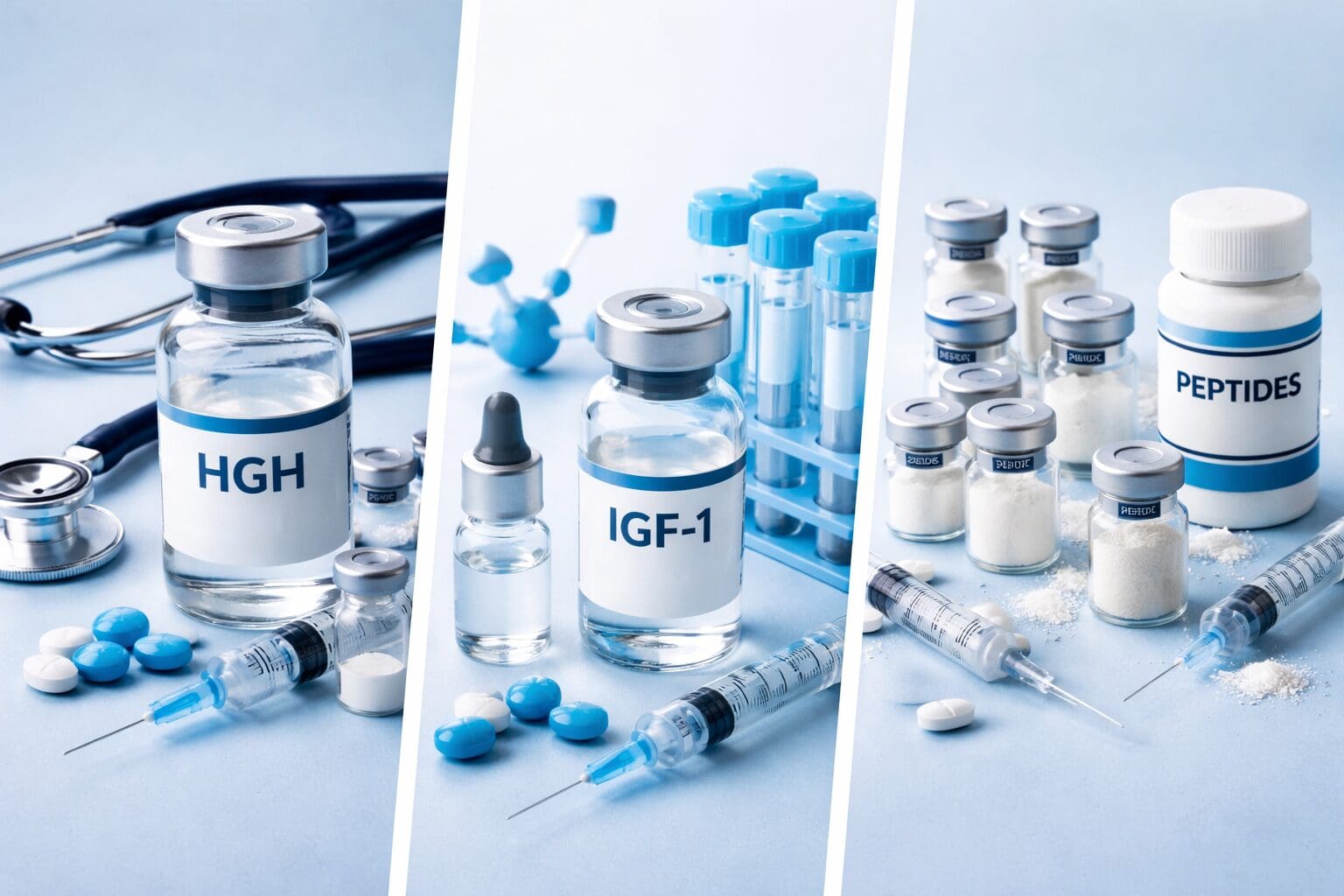
The Difference Between HGH, IGF-1, and Peptide Therapy
Hormone optimization plays a huge role in modern wellness and age-management care. Among the various options, HGH, IGF-1, and peptide therapy are most discussed. While these treatments are often grouped they work in different ways and serve distinct purposes.
What Is HGH (Human Growth Hormone)?
Human Growth Hormone (HGH) is a hormone that the body naturally produces in the pituitary gland. It plays a crucial role in growth, metabolism, muscle development, and tissue repair throughout life.
How HGH Works in the Body
HGH stimulates cell regeneration and it supports:
- Bone density
- Skin elasticity
- Overall energy levels
- Lean muscle growth
- Fat metabolism
As people age, natural HGH production declines. This may result in slower recovery, reduced muscle mass, and increased body fat.
HGH Therapy
In HGH therapy, synthetic growth hormone is used to bring hormone levels closer to those found in younger individuals. When prescribed appropriately, it may support body composition, physical performance, and recovery.
However, HGH therapy must be carefully monitored, as excessive dosing can lead to side effects such as fluid retention or joint discomfort.
What Is IGF-1 (Insulin-Like Growth Factor 1)?
IGF-1 is a liver-derived hormone regulated by human growth hormone. It acts as a key mediator of many of HGH’s effects.
The Relationship Between HGH and IGF-1
HGH signals the body to produce IGF-1, which then promotes bone development, muscle protein synthesis and cell growth and repair. In simple terms, HGH is the signal, and IGF-1 carries out much of the action at the cellular level.
IGF-1 Therapy Considerations
IGF-1 therapy directly introduces this growth factor into the body. While it can stimulate tissue growth, it does not follow the body’s natural regulatory feedback systems in the same way HGH does.
Because of this, IGF-1 therapy requires careful medical oversight to avoid overstimulation of cell growth.
What Is Peptide Therapy?
Peptide therapy relies on amino acid chains that signal specific biological responses in the body. Certain peptides are designed to stimulate the body’s own natural production of HGH, rather than replacing it.
How Peptides Work
Growth hormone–related peptides typically act on the pituitary gland, encouraging it to release HGH in a more natural, pulsatile pattern.
Benefits of peptide therapy may include:
- Increased energy
- Improved sleep quality
- Support for lean muscle and fat loss
- Enhanced recovery
Because peptides work with the body’s existing systems, many patients find them to be a gentler option.
Key Differences Between HGH, IGF-1, and Peptide Therapy
Method of Action
- HGH: Replaces growth hormone directly
- IGF-1: Acts downstream to stimulate cell growth
- Peptide Therapy: Encourages natural HGH production
Regulation and Balance
Peptide therapy and HGH both interact with the body’s feedback mechanisms, while IGF-1 bypasses some of this regulation.
Treatment Goals
- HGH may support broader anti-aging and metabolic goals
- IGF-1 focuses on cellular growth effects
- Peptides aim to optimize natural hormone signaling
Tailoring treatment to each patient promotes both safe care and effective outcomes. At MetroMed, hormone and peptide therapies are guided by evidence-based medicine and individualized care. Each patient receives expert oversight, and tailored treatment strategies designed to support long-term health, performance, and vitality. If you are exploring HGH, IGF-1, or peptide therapy, working with our experienced medical team can make all the difference in achieving safe and sustainable results.