

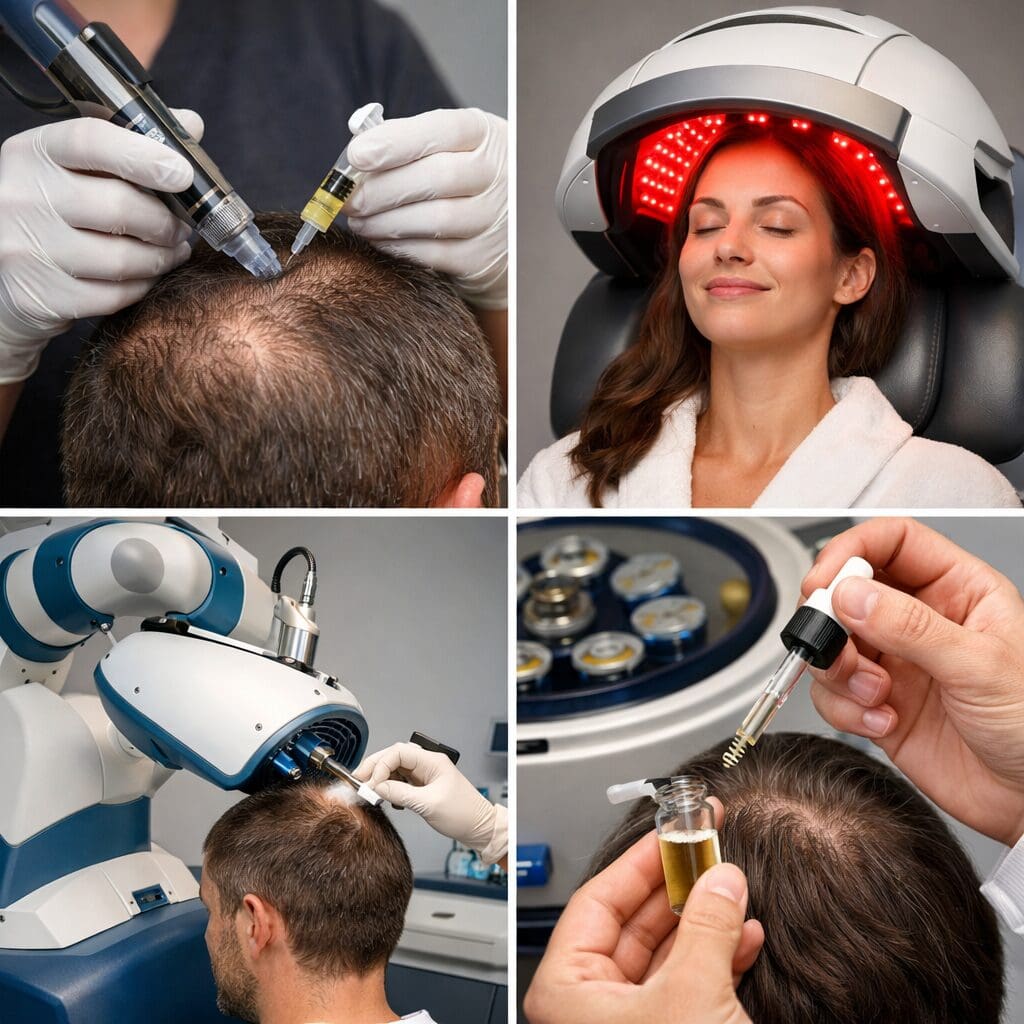
Best Non-Surgical Hair Restoration Treatments for 2025
Hair restoration has evolved with major advancements in recent years. In 2025, patients now have access to more effective, minimally invasive options that promote natural hair growth without surgery or long recovery times. Whether you’re noticing early thinning or dealing with advanced hair loss, today’s non-surgical therapies can deliver real improvements for both men and women.
PRP (Platelet-Rich Plasma) Therapy
PRP therapy continues to be one of the most trusted non-surgical hair restoration treatments. It uses your body’s own platelets to stimulate hair follicles and improve hair density.
How PRP Works
During PRP therapy, a small amount of blood is drawn and spun in a centrifuge to concentrate the platelets. These platelets carry growth factors that support hair follicle activity and reduce inflammation.
Why Patients Choose PRP
- Uses natural growth factors with no added chemicals
- Promotes thicker, healthier hair
- Works for both men and women experiencing thinning or shedding
- Minimal downtime
In 2025, advancements in processing methods make PRP even more potent and consistent than before.
Exosome Hair Restoration Therapy
Exosome therapy is one of the most advanced non-surgical options available today. Exosomes are tiny cellular messengers that support tissue repair and follicle regeneration.
Why Exosomes Are a Breakthrough
- They help improve scalp health and reduce inflammation
- They carry signaling molecules that support hair growth
- Treatments are quick and minimally invasive
Low-Level Laser Therapy (LLLT)
Low-Level Laser Therapy remains a popular option for patients who prefer a painless, at-home or in-office treatment.
How LLLT Helps Hair Growth
LLLT uses red or near-infrared light to improve blood flow to the scalp and strengthen hair follicles. Regular use can slow down thinning and encourage thicker strands.
Key Benefits
- Completely non-invasive
- No downtime or discomfort
- Can be used alongside PRP, exosomes, or medications
Growth Factor Serums and Topical Treatments
Modern topical therapies have improved greatly, giving patients more effective non-prescription options.
What’s Popular in 2025
- Stem-cell–inspired formulations
- Growth factor serums
- Peptide-based treatments
These treatments support the scalp environment and complement in-office procedures for better results.
Medical Management: Minoxidil and Finasteride
While not new, medical therapy remains a core part of non-surgical hair restoration.
Updated Benefits in 2025
- Minoxidil now comes in more advanced formulations with improved absorption
- Finasteride is available in low-dose oral and topical variations to reduce side effects
When combined with PRP, laser therapy, or exosomes, medications significantly enhance long-term outcomes.
Scalp Micropigmentation (SMP)
Scalp Micropigmentation is a cosmetic solution that creates the look of fuller hair using detailed pigment placement.
Why SMP Works Well
- Gives the appearance of thicker density
- Long-lasting and low maintenance
- Ideal for thinning, receding hairlines, or advanced hair loss
It’s not a growth treatment, but it provides immediate visual improvement.
Choosing the Right Non-Surgical Hair Restoration Treatment
Every patient’s hair loss profile is unique, so the best treatment plan often combines multiple approaches. A typical 2025 non-surgical hair restoration plan may include:
- PRP or exosome therapy for growth
- LLLT for ongoing follicle support
- Minoxidil or finasteride for maintenance
- SMP for enhanced density or hairline definition
Working with a trained medical provider ensures you receive a plan tailored to your individual needs and long-term goals.
If you’re beginning to notice thinning hair or changes in your hairline, addressing hair loss, with a personalized treatment plan and a focus on regenerative medicine, MetroMed offers a proactive path toward long-term hair health and natural results.