

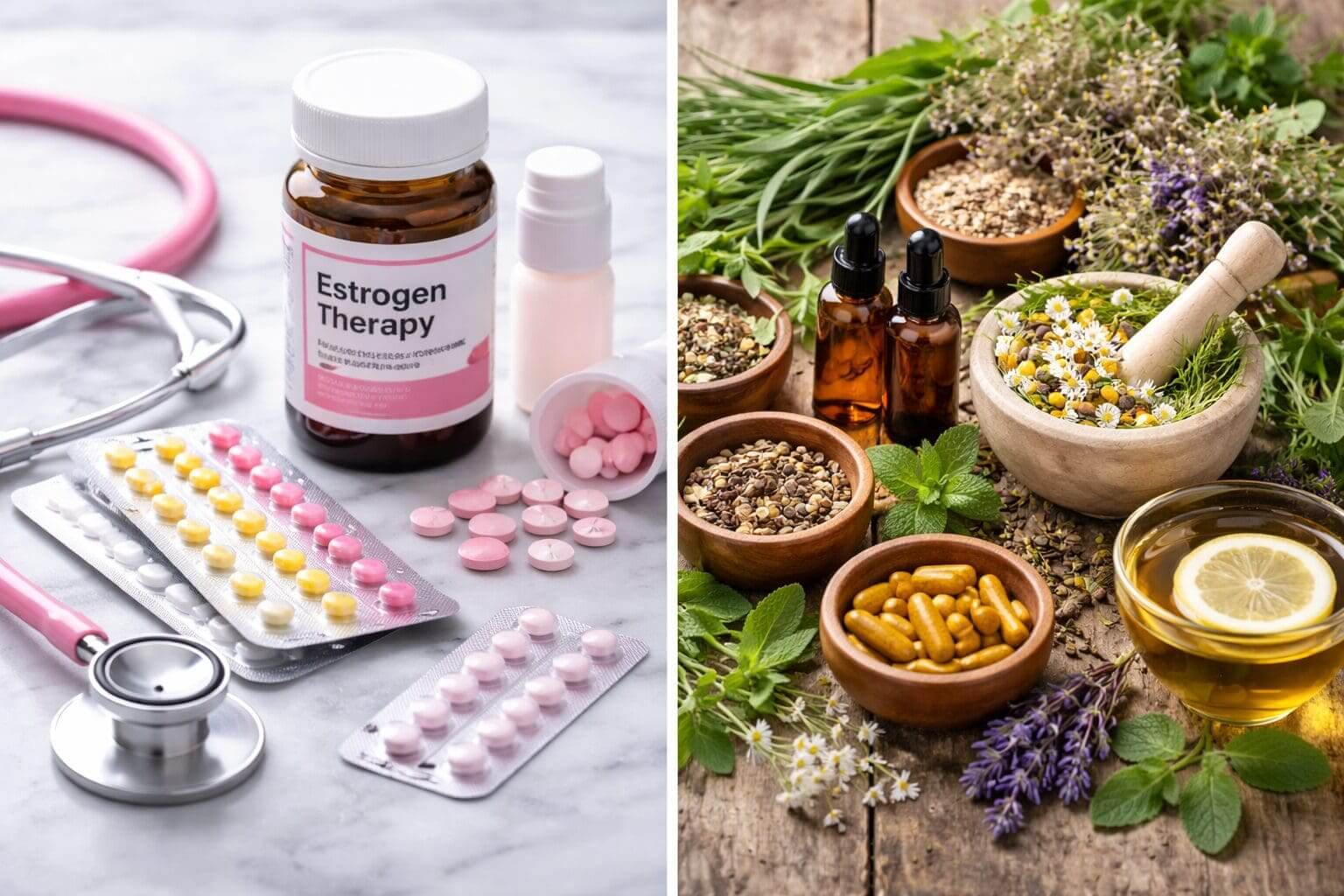
Estrogen Therapy vs Herbal Alternatives: What Works Better?
Many women experience hormonal changes as they age, especially during menopause. As estrogen levels drop, symptoms like hot flashes, night sweats, mood changes, and bone loss often appear. Because of this, many people search for answers and ask the same question: Estrogen therapy vs herbal alternatives: what works better?
Both options aim to ease symptoms, but they work very differently. Below, we explain how each approach works, what science supports, and how to decide which option may be right for you.
Understanding Estrogen Therapy
Estrogen therapy is a medical treatment that replaces estrogen the body no longer produces in sufficient amounts. Doctors often prescribe it as part of hormone replacement therapy (HRT) for menopause-related symptoms.
How Estrogen Therapy Works
Estrogen therapy restores hormone levels in the body. As a result, it directly addresses the root cause of many menopause symptoms. Estrogen interacts with receptors in the brain, bones, skin, and reproductive tissues. Because of this targeted action, it often delivers noticeable relief.
Doctors may prescribe estrogen as pills, patches, gels, creams, or vaginal treatments. The method and dose depend on a patient’s symptoms, age, and health history.
Benefits of Estrogen Therapy
Estrogen therapy remains the most effective treatment for moderate to severe menopausal symptoms. It consistently reduces hot flashes and night sweats. In addition, it helps protect bone density and lowers the risk of osteoporosis after menopause.
Many women also notice improvements in sleep, vaginal comfort, and overall quality of life. When prescribed correctly and monitored by a clinician, estrogen therapy can be both effective and safe for many patients.
Risks and Considerations
Like any medical treatment, estrogen therapy is not for everyone. Certain women may face higher risks, especially those with a history of blood clots, stroke, or hormone-sensitive cancers. However, modern guidelines emphasize using the lowest effective dose for the shortest necessary time.
Today, healthcare providers carefully personalize treatment plans, which has significantly improved safety outcomes. This makes medical supervision essential when considering estrogen therapy.
Exploring Herbal Alternatives
Herbal alternatives include plant-based supplements often marketed as “natural” menopause remedies. Many of these products contain phytoestrogens, which are plant compounds that weakly mimic estrogen in the body.
Common Herbal Options
Popular herbal alternatives include black cohosh, red clover, soy isoflavones, and evening primrose oil. These supplements are widely available without a prescription and are often promoted for hot flashes and mood support.
Some women report mild symptom relief, especially for occasional hot flashes. However, results differ from person to person.
Benefits of Herbal Alternatives
Herbal remedies appeal to those who prefer non-prescription or plant-based approaches. They may offer mild symptom support for women with less severe menopause symptoms.
Additionally, herbal options may feel more approachable for individuals who cannot or prefer not to use hormone therapy.
Limitations and Safety Concerns
Despite their popularity, herbal alternatives lack strong and consistent scientific evidence. Studies show mixed results, and benefits tend to be modest compared to estrogen therapy.
Another concern involves quality and safety. Supplements are not regulated as strictly as prescription medications. This means product strength, purity, and effectiveness can vary widely. Some herbs may also interact with medications or cause side effects when used long term.
Estrogen Therapy vs Herbal Alternatives: Key Differences
Bone Health:
- Estrogen therapy helps prevent bone loss and lowers the risk of osteoporosis.
- Herbal remedies offer little to no proven bone protection.
Treatment Role:
- Estrogen therapy serves as a primary medical treatment.
- Herbal alternatives are better suited as complementary or supportive options.
Effectiveness:
- Estrogen therapy directly replaces missing hormones and consistently relieves menopause symptoms.
- Herbal alternatives provide indirect and often inconsistent results.
Reliability:
- Estrogen therapy is supported by extensive clinical research
- Herbal remedies show mixed scientific evidence.
Symptom Severity:
- Estrogen therapy works best for women with moderate to severe symptoms.
- Herbal alternatives may help women with mild symptoms.
Medical Oversight:
- Estrogen therapy requires clinician supervision for safety and dosing.
- Herbal supplements are available over the counter but lack consistent regulation.
Which Option Works Better?
For most women, estrogen therapy works better when symptoms significantly affect daily life. It has decades of research behind it and remains the gold standard for menopause treatment when medically appropriate.
However, the right choice depends on your health history, symptoms, and personal preferences. Some women may start with lifestyle changes or herbal supplements, while others benefit more from medical therapy.
Thoughts on Treatment Choices
Menopause is not the same for everyone, and neither is treatment. Understanding the differences between estrogen therapy and herbal alternatives empowers you to make informed decisions. Evidence shows that estrogen therapy delivers the most reliable relief, while herbal options may offer limited support for mild symptoms.
How MetroMed Can Help
At MetroMed, we focus on personalized, evidence-based care. If you are experiencing menopause symptoms and want clear answers, we are here to support your journey toward better health and balance. Whether you are exploring estrogen therapy, alternative approaches, or a combination of both, MetroMed provides expert guidance tailored to your needs.