

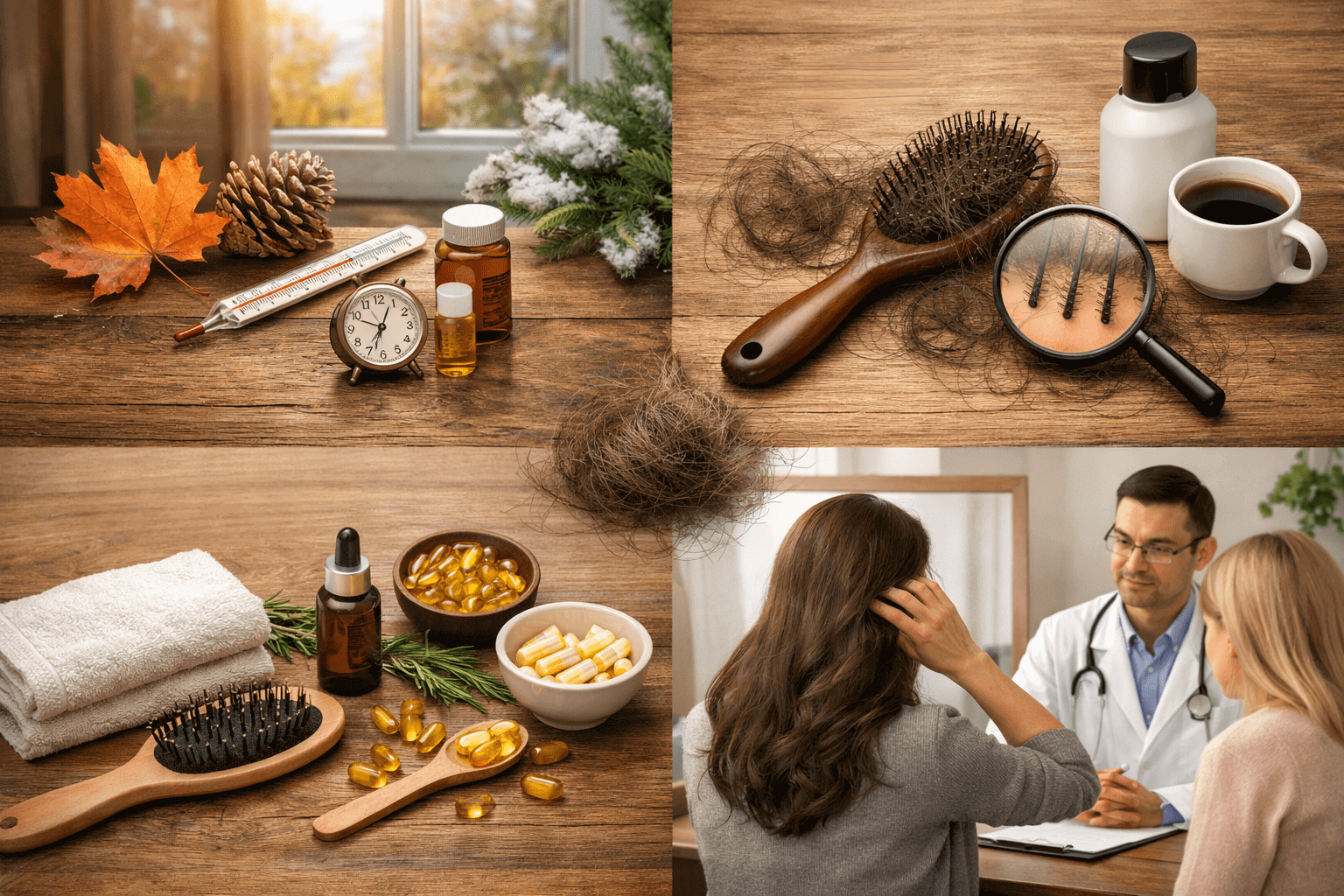
Seasonal Hair Shedding: Causes, Myths & Treatments
Seasonal hair shedding can be alarming, especially when you notice more hair in the shower or on your brush. However, for many people, this type of hair loss is a normal and temporary part of the hair growth cycle.
Understanding why it happens, what myths to ignore, and which treatments actually help can give you peace of mind and protect your hair health.
What Is Seasonal Hair Shedding?
Seasonal hair shedding refers to a temporary increase in hair loss that often occurs during certain times of the year, most commonly in the fall and sometimes in the spring. During these periods, more hair follicles enter the resting phase of the hair growth cycle, leading to noticeable shedding.
In most cases, seasonal hair shedding is not a sign of permanent hair loss or a serious medical condition.
Understanding the Hair Growth Cycle
To understand seasonal hair shedding, it helps to know how hair grows.
The Three Phases of Hair Growth
- Anagen (Growth Phase): Hair grows continuously over several years.
- Catagen (Transition Phase): Hair growth slows down as the follicle begins to shrink.
- Telogen (Resting Phase): Hair temporarily stops growing and stays at rest before it falls out.
Seasonal changes can shift more hairs into the telogen phase, which increases shedding.
Common Causes of Seasonal Hair Shedding
Seasonal hair shedding does not have one single cause. Instead, several factors often work together.
Physical and Emotional Stress
Holidays, travel, schedule changes, and illness can increase stress on the body. Stress can push hair follicles into the resting phase earlier than normal.
Temperature and Weather Shifts
Cold air, dry indoor heat, and sudden temperature changes can stress the scalp. As a result, hair may become weaker and more likely to shed.
Changes in Daylight
Exposure to sunlight affects hormones that influence the hair cycle. Longer daylight hours in summer may keep hair in the growth phase longer. When daylight decreases in fall, more hair can move into the resting phase.
Scalp Health Changes
Seasonal dryness or oiliness can affect the scalp environment. An unhealthy scalp may not support strong hair growth, which can contribute to shedding.
Seasonal Hair Shedding vs. Hair Loss Conditions
It is important to tell the difference between seasonal hair shedding and medical hair loss.
Key Differences
- Seasonal shedding is temporary and evenly distributed across the scalp.
- Medical hair loss may cause thinning in specific areas or patches.
- Seasonal shedding usually resolves within a few months.
If hair shedding continues longer than three to four months or leads to visible thinning, a medical evaluation is recommended.
Common Myths About Seasonal Hair Shedding
Misinformation can make hair shedding feel more frightening than it needs to be.
Myth 1: Washing Hair More Causes Shedding
Normal washing does not cause hair loss. Washing simply removes hairs that have already entered the shedding phase.
Myth 2: Seasonal Shedding Means You Are Going Bald
Seasonal hair shedding does not cause permanent baldness. In most cases, hair regrows naturally once the cycle resets.
Myth 3: Cutting Hair Stops Shedding
Haircuts do not affect the hair follicle or the growth cycle. While trims improve appearance, they do not prevent shedding.
Effective Treatments for Seasonal Hair Shedding
Although seasonal hair shedding often resolves on its own, certain treatments and habits can support healthy regrowth.
Maintain a Healthy Scalp
- Keep the scalp clean and moisturized
- Use gentle, sulfate-free shampoos
- Avoid excessive heat styling
Focus on Nutrition
Hair growth depends on proper nutrition. A balanced diet that includes protein, iron, zinc, and vitamins supports stronger hair. In a few cases, a healthcare provider may recommend supplements.
Manage Stress
Regular exercise, quality sleep, and stress-reduction techniques can help regulate the hair growth cycle.
Medical Treatments When Needed
If shedding is severe or prolonged, medical treatments may help. Options can include topical therapies or prescription treatments, depending on the cause. A professional evaluation ensures the right approach.
When to See a Medical Professional
You should consider medical care if:
- Hair shedding lasts longer than four months
- You notice thinning or bald spots
- Shedding follows illness, surgery, or major stress
- There is itching, redness, or scalp pain
Early evaluation helps rule out underlying conditions and supports better outcomes.
Preventing Seasonal Hair Shedding
While you cannot fully prevent seasonal hair shedding, healthy habits can reduce its impact.
- Protect hair from extreme weather
- Eat a nutrient-rich diet
- Stick to a consistent hair care routine
- Address medical issues early
These steps support long-term hair and scalp health.
At MetroMed, our experienced medical providers understand the many factors that affect hair health, including seasonal hair shedding. We offer personalized evaluations to determine whether hair shedding is part of a normal cycle or related to an underlying medical condition.
With a patient-centered approach, we focus on accurate diagnosis, evidence-based treatment options, and long-term scalp and hair health support. Scheduling a professional consultation can help you take the next step toward healthier, stronger hair.