

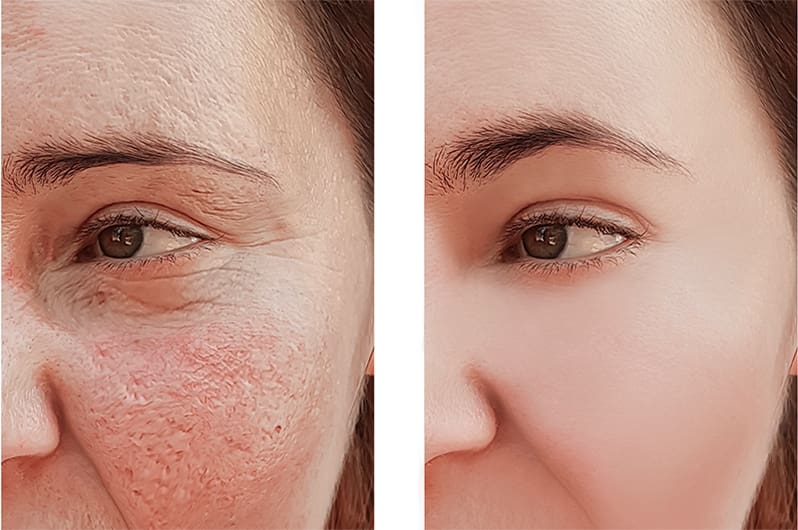
CO2 Laser vs Chemical Peels: Which Works Better?
Chemical peels improve the skin by applying a specialized solution that exfoliates damaged outer layers. As the skin sheds, fresher, smoother skin is revealed underneath. Peels come in a range of strengths, which allows providers to tailor treatments based on individual skin type and aesthetic goals.
Compared to laser treatments, chemical peels are generally less intense and involve less downtime. Results tend to appear gradually, especially with lighter peels that are performed over multiple sessions. This makes chemical peels a popular option for patients who want subtle improvements without a long recovery period.
Key Differences Between CO2 Laser and Chemical Peels
The biggest difference between CO2 laser resurfacing and chemical peels is how deeply they treat the skin. CO2 lasers penetrate deeper layers, stimulating collagen production and resurfacing from within. Chemical peels, on the other hand, primarily focus on surface-level concerns.
CO2 laser treatments are ideal for deeper wrinkles, acne scars, and significant sun damage. Chemical peels work best for uneven skin tone, fine lines, and mild texture issues. Each treatment targets different concerns, which is why one isn’t necessarily “better” than the other—it depends on what your skin needs.
Downtime is another important factor. CO2 laser resurfacing typically requires one to two weeks of recovery, while chemical peels usually allow patients to return to normal activities within a few days, depending on the peel’s strength.
In terms of longevity, CO2 laser resurfacing often provides longer-lasting results because collagen remodeling continues for months after treatment. Chemical peels offer steady improvement, but maintenance treatments are usually required to sustain results.
Which Treatment Works Better?
CO2 laser resurfacing is often the better choice for patients looking for dramatic, long-term results and who can commit to the necessary recovery time. It’s commonly recommended for deeper skin concerns and more advanced signs of aging.
Chemical peels are a great option for those who want gradual improvement with minimal downtime. They’re especially suitable for patients who are new to professional skin treatments or those looking to maintain results from previous procedures.
In many cases, combining both treatments can produce balanced, natural-looking results. A customized plan may involve using chemical peels for ongoing maintenance after a CO2 laser treatment.
Additional Considerations
Skin type and tone play a key role in choosing the right treatment. Some skin tones may be more prone to pigmentation changes, making professional evaluation essential before undergoing either procedure. An experienced provider can recommend the safest and most effective approach for your skin.
It’s also important to have realistic expectations. While both treatments can significantly improve skin quality, results are not instant perfection. Healing, collagen production, and gradual improvement are all part of the process.
Lifestyle factors such as sun exposure, skincare habits, and overall health can influence results. Patients who commit to proper skincare and sun protection often experience better and longer-lasting outcomes.
Safety and Aftercare
Both treatments require professional evaluation and careful aftercare. Sun protection is critical, as treated skin becomes more sensitive to UV exposure. Following your provider’s instructions helps minimize irritation and supports proper healing.
Both CO2 laser resurfacing and chemical peels are effective skin rejuvenation options. CO2 lasers offer deeper correction and longer-lasting results, while chemical peels provide flexibility, convenience, and less downtime. The right choice depends on your skin concerns, goals, and lifestyle.
At MetroMed, we take a personalized approach to skincare. Our medical experts carefully evaluate your skin and recommend treatments that align with your goals and comfort level. We help you achieve healthier, more radiant skin with confidence.