

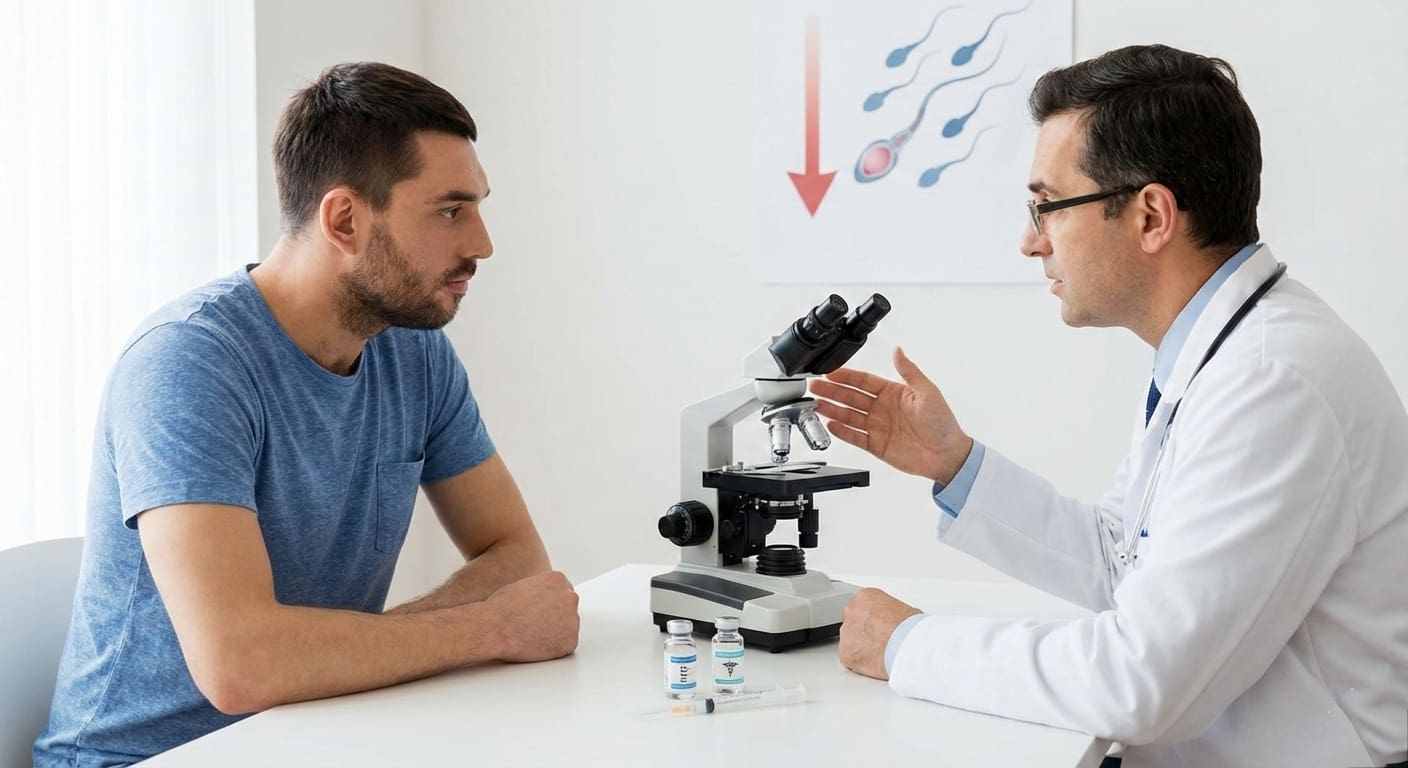
Does TRT Increase or Decrease Fertility?
Testosterone replacement therapy (TRT) helps many men improve energy, mood, libido, and overall quality of life. However, one question often arises: Does TRT increase or decrease fertility? Understanding TRT’s effect on fertility is essential for men who want to build a family or preserve future fertility.
In this article, we explain how TRT works, how it impacts male reproductive health, and what alternatives exist for men concerned about fertility.
What Is Testosterone Replacement Therapy (TRT)?
Testosterone replacement therapy (TRT) is a medical treatment used to boost testosterone levels in men with low testosterone (low T). TRT can come in many forms, including:
- Injections
- Gels and creams
- Patches
- Pellets
The therapy can improve strength, mood, sexual performance, and energy. Yet, it affects the body’s hormonal system, especially the hormones that control sperm production.
How Testosterone Affects Male Fertility
Male fertility depends on sperm production, which happens in the testicles. Key hormones involved in this process include:
- Testosterone – essential for sperm production
- Luteinizing Hormone (LH) – signals testosterone production
- Follicle-Stimulating Hormone (FSH) – directly stimulates sperm formation
Normally, the brain signals the testicles to produce testosterone and sperm through LH and FSH. With TRT, this feedback loop changes.
Does TRT Increase Fertility?
In short it’s No. Unlike treatments specifically designed to improve sperm production, TRT focuses on raising testosterone in the bloodstream. Higher testosterone levels from TRT do not automatically translate to more sperm. In fact, TRT often suppresses the body’s natural hormone signaling, which can reduce sperm production.
Does TRT Decrease Fertility?
Yes, in some cases, TRT decreases fertility.
Here’s Why:
When you take external testosterone:
- The brain senses high testosterone levels.
- The testicles receive fewer signals to make sperm.
- It reduces the production of LH and FSH.
- Sperm production drops.
This process is called negative feedback suppression. Without stimulation from LH and FSH, the testicles may shrink, and sperm count may fall significantly. Men planning children should discuss options before starting TRT.
How Much Does TRT Affect Fertility?
The degree varies, but few men experience:
- Lower sperm count
- Reduced sperm quality
- Testicular shrinkage
- Temporary infertility
In some cases, sperm count may recover after stopping TRT, but recovery can take months to years. Some men may not fully restore fertility without medical support.
Fertility-Friendly Options for Men with Low Testosterone
If you want to maintain or improve fertility, there are alternatives to traditional TRT:
1. Human Chorionic Gonadotropin (hCG)
hCG mimics LH and helps stimulate the testicles to produce testosterone and sperm.
2. Clomiphene Citrate (Clomid)
Clomid can raise testosterone without suppressing sperm production by stimulating the brain to increase LH and FSH.
3. Selective Estrogen Receptor Modulators (SERMs)
SERMs may improve hormonal balance and support fertility in select cases.
4. Lifestyle Changes
Exercise, healthy weight, good sleep, and avoiding smoking or excessive alcohol can naturally improve testosterone and sperm health.
Can Fertility Return After TRT?
Yes, but it depends on many factors:
- Age
- Use of fertility-supporting medications
- Duration of TRT
- Overall health
Stopping TRT may allow the body to restart natural hormone production, but it can take three to 12 months or more. Some men choose to use hCG or other medications to speed recovery.
Talk to a Specialist at MetroMed
At MetroMed, we provide personalized care for hormone health and fertility preservation. If you’re considering TRT and concerned about fertility, our experienced providers can help you understand your options and create a plan that supports your goals. Contact us to schedule a consultation and get expert guidance tailored to your needs.